Project Report
| Oct 10, 2022
Namutosi & Chelangat
By Adam Hewitt Smith | Trustee, Born on the Edge
![]() We are delighted to share with you two stories that demonstrate the work we do, but the space is so squeezed we struggle to fit all our tiny babies in and alongside these success stories are many sad and frustrating deaths. We continue to fundraise towards our new neonatal unit and thank you for your support.
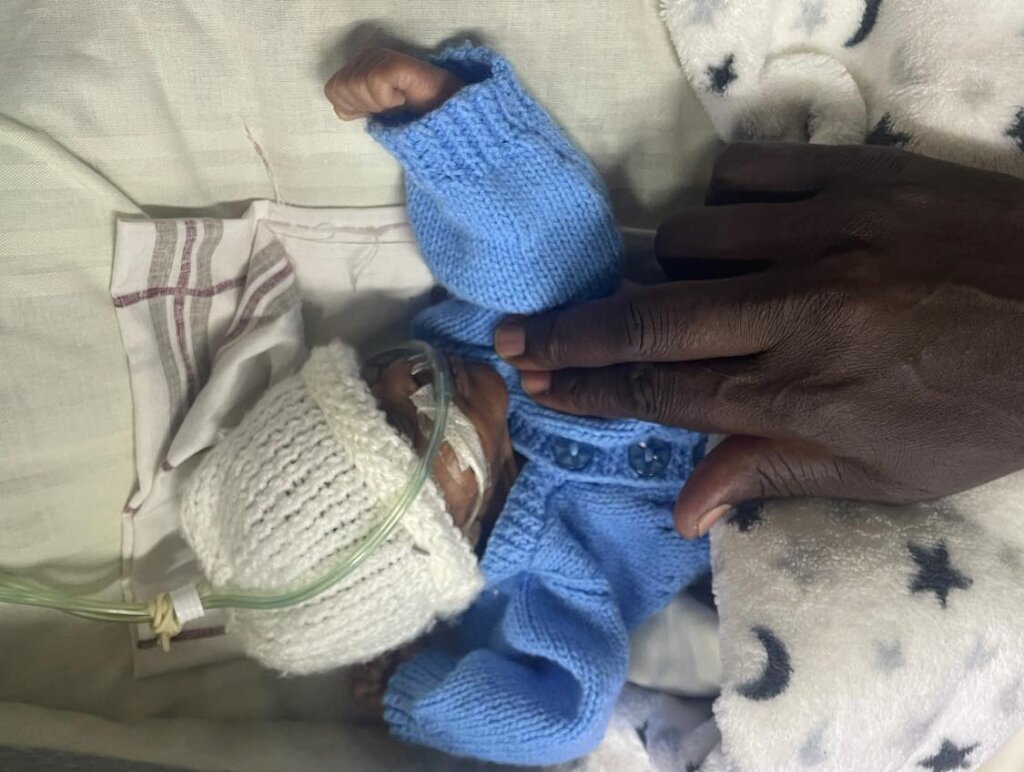
"When I was told I was going to be operated on before my due date, I did not think my baby would make it. I was very scared of what would happen. When I got to the neonatal unit I was worried when I saw my baby on a breathing machine (CPAP), and kept asking the doctors why my baby had to stay on it for so long.
Early on, I had a big challenge with my caretakers (the people helping me in hospital), as they weren’t following the advice of the neonatal team and rules of the neonatal unit. They had given up on my baby and wanted us to be discharged.
I finally managed to make it to the neonatal unit and took charge of my baby and this really made a difference. The team explained what was expected of me and encouraged me to take an active role in the care of my baby.
The rules on hygiene and infection prevention in the neonatal unit were very strict and sometimes hard to follow. But I now understand that it was all to protect our babies from the different illnesses that can be spread by poor hygiene. Up to now I keep strict hygiene before handling my baby and it has really helped.
I really want to encourage other mothers in eastern Uganda, who might deliver preterm babies, not to give up on their babies. If they bring them to the neonatal unit, the team will care for and treat their baby. All that they need to do is follow the strict feeding and hygiene rules and their baby will also make it.
Thank you to the team of the neonatal unit for taking care of my baby, I didn’t think I would go home with a live baby. I am so very grateful.” - Namutosi
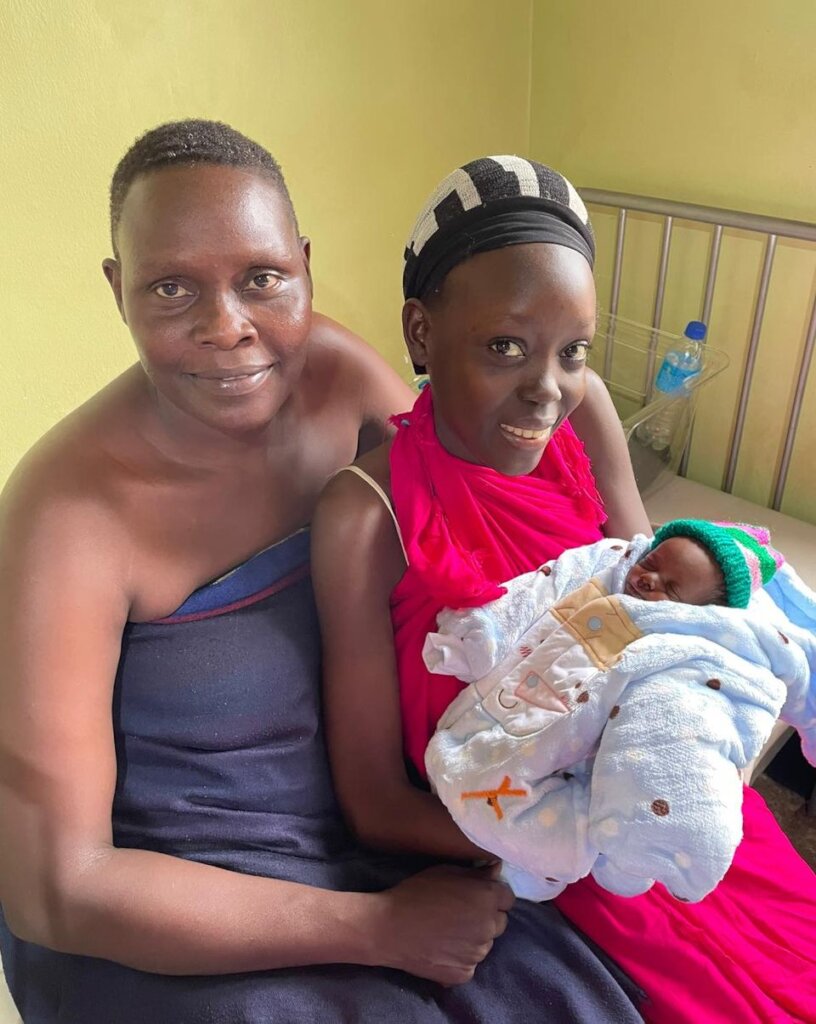
“I am so very happy for my baby to be discharged from the hospital today. Before delivering this baby I had never seen a baby this small. He was just 900g. My husband and I were very worried. Immediately we delivered the baby in Kapchorwa district we were referred to Mbale since they said they could not handle a baby this size there. They had no machines to help the baby breathe and the weather is much colder in Kapchorwa than Mbale. We were worried that the cold would be bad for our baby. Our experience in the neonatal unit in Mbale was a great one, we were immediately received and handled by the staff here.
The strict rules were a challenge but we were explained to the reason why we needed to follow all those rules to help protect our baby from infection.
Over the 5 weeks we have been here, my husband and I have learned how to do kangaroo care. We enjoy the feeling of closeness to our baby. We were told that it would help keep the baby warm and for him to grow.
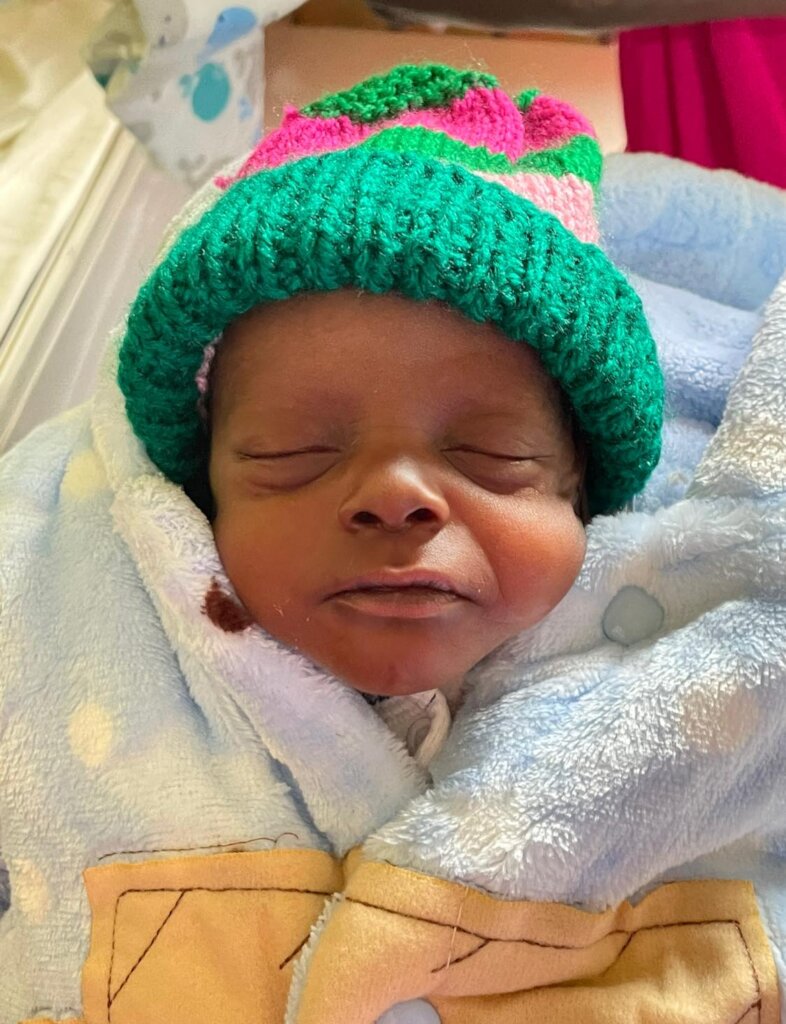
My husband and I are very happy with how our baby has grown now. He can take milk very well and is gaining weight.
I encourage mothers who have such small babies to bring them here as I know they will be taken good care of them. With this neonatal unit, there is hope for small babies like mine to survive. We are very grateful to the neonatal team and pray that God continues to bless them.” - Chelengat
Please continue to share our work with your friends and colleagues so that they too can experience our inspiring stories.
![]()
![]()
![Share on Twitter]()
![Share on Facebook]()
Jun 13, 2022
Happy 7th Birthday
By Adam Hewitt Smith | Trustee
![]()
It is an amazing 7 years since we joined together in partnership with Mbale Regional Referral Hospital in eastern Uganda, to open the doors of the neonatal unit! And we haven’t looked back or stopped since!
Our admissions have rocketed from around 100 sick and small babies a month to almost 300 a month. Alongside our mortality has plummeted from 52% to just over 10%. To put that into numbers, we are now saving the lives of over 1,100 babies a year who would otherwise not have made it! In fact since we started our project we have treated almost 18,000 newborn babies.
Our skilled team work hand in hand with the hospital team, training up new team members and leading life saving newborn care. Alongside this we continue to train medical and nursing students and healthcare workers through short attachments to the neonatal unit. We still regularly deliver our newborn care training courses across hospitals across eastern Uganda. And everyday we push the boundaries of what is achievable in this low-resource setting. We run a 10-bed high-dependency care unit, perform bedside brain scans, lung ultrasounds and heart scans everyday.
Whilst we are always delighted to share the successes we achieve with you, we realise that none of this would be possible without your generosity and support. In reality, we are overwhelmed in an incredibly small space. Our high-dependency area should have 2 beds in, not 10 and our ward which has the capacity for 20 patients is filled with up to 100 at any one time.
Our babies are some of the most vulnerable in the world and we need more support to achieve our dream of building a new home for the team. Our designs for a neonatal unit have been developed specifically for our uniquie challenges in Uganda such as high patient numbers, low staffing levels and regular challenges with power and water. Until it is built, we will continue to suffer.
We hope that you can help us achieve our dream.
![]()
![]()
![Share on Twitter]()
![Share on Facebook]()
Feb 14, 2022
My name is Ajilongo
By Adam Hewitt Smith | Trustee, Born on the Edge
![]()
“My name is is Ajilongo, I am 25 years old, I suffer from sickle cell disease and I am now a mother. Sickle cell disease is a blood disorder which I inherited from my parents, which means my blood cells (haemoglobin) are damaged and can't carry oxygen to my body properly.
This was my first pregnancy, and despite my sickle cell disease, I managed to carry my pregnancy up until early in my 3rd trimester. By this time I was an inpatient in the gynaecology ward, where I was receiving multiple transfusions for my sickle cell crises. At 31 weeks of gestation, I went into preterm labour, which is a risk for mothers with sickle cell disease. I delivered my twins weighing just 1200g and 1300g. My two tiny babies were quickly rushed to the neonatal unit and immediately put on breathing machines (CPAP).
Sadly my 2nd twin was diagnosed with a heart condition where the blood was not flowing correctly in his heart (PPHN) and this further made his condition detoriate. The doctors tried to give some medicines but all was on vain and my small boy breathed his last breath on day 3.
My surving twin was also not stable and on day 4 was diagnosed with a small whole on the heart (PDA). This made me more worried and anxious and triggered another sickle crisis. I was rushed to another ward for management and my mother took over caring for this surviving twin. It was still a hard battle because this small boy got an infection and kept on having episodes of apnoeas (stopping to breath) and this made my mother have sleepless nights. The doctors kept changing medicines for my small boy and finally he responded to meropenem, but it was really expensive for my family as it wasn’t available in the hospital. We were however really thankful for a donation of the drug caffeine in the neonatal unit to help him remember to breathe. With these drugs, together with the CPAP, he began to improve.
My small boy was on the breathing machine for 4 weeks. During this time I received over 20 blood transfusions for my sickle crisis. I became so unstable, weak and my breastmilk reduced so much, that I didn't have enough breast milk for my baby. I was assisted by screened donor human milk which my mother used to feed my baby with. If all that wasn’t enough, my mother then also developed malaria and she become weak and couldn't manage to give the 2 hourly feeds to my baby. Thankfully, she was supported by the staff on the neonatal unit and other good mothers on ward to help monitor and feed my little boy.
After a period of 7 weeks of battling and struggling to save the life of my small boy, my mother, my baby and I are going home. We send our sincere appreciation to the doctors and nurses in the neonatal unit who worked tirelessly to help my baby survive.”
Born on the Edge are so grateful to all their supporters who allowed this story, and many others, to have the happy endings that they did. However we remain squeezed into a small ward without enough space. This makes our babies vulnerable to hospital acquired infections and prevents us from saving even more lives. Please contribute to our centre of excellence. We need your support.
![]()
![]()
![Share on Twitter]()
![Share on Facebook]()